
Can Turtles Climb Trees?
A Science-Based Explanation of What Is Really Possible
Most turtles cannot climb trees in the way people imagine. They do not climb straight vertical trunks like squirrels or cats. Some turtle species can climb angled tree trunks, exposed roots, fallen trees, and rough surfaces for short distances. This difference matters for accuracy, safety, and the well-being of wildlife.
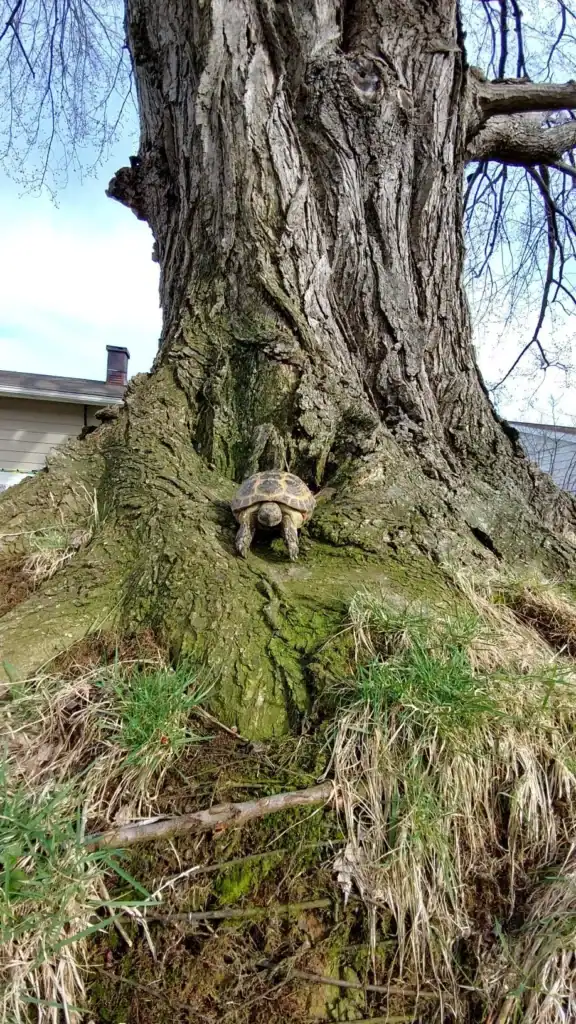
When people ask whether turtles can climb trees, they usually mean one of four situations.
- A turtle on a leaning or angled tree trunk
- A turtle climbing roots near water
- A turtle on a fallen log or debris
- A turtle attempting to scale a vertical surface
Each case involves very different physical demands.
What turtles can and cannot do physically
Turtles evolved for swimming, digging, and walking on uneven ground. They did not evolve for vertical climbing.
Body structure and movement limits
A turtle’s body creates clear limits.
- Short legs with limited reach
- A heavy shell that raises the center of mass
- Slow gait and limited flexibility
These traits reduce stability on steep or vertical surfaces.
Claws grip and surface traction
Claws help with traction, not climbing height.
- Claws grip rough textures like bark, roots, and rock
- Wet or smooth surfaces sharply reduce grip
- Moss, algae, and mud increase slip risk
Shell shape balance and center of mass
Shell height and weight matter.
- Flat-shelled freshwater turtles maintain better balance
- High domed tortoises tip more easily
- Forward tilt increases fall risk quickly
Types of tree related climbing behaviors
Climbing angled trunks and leaning trees
This is the most common scenario.
- Trees leaning over water create low angle surfaces
- Rough bark improves traction
- Climbs usually stay under short distances
Climbing exposed roots and buttress bases
Roots act like natural ramps.
- Found near rivers, lakes, and wetlands
- Often used for basking or access to water
- Low fall risk compared to trunks
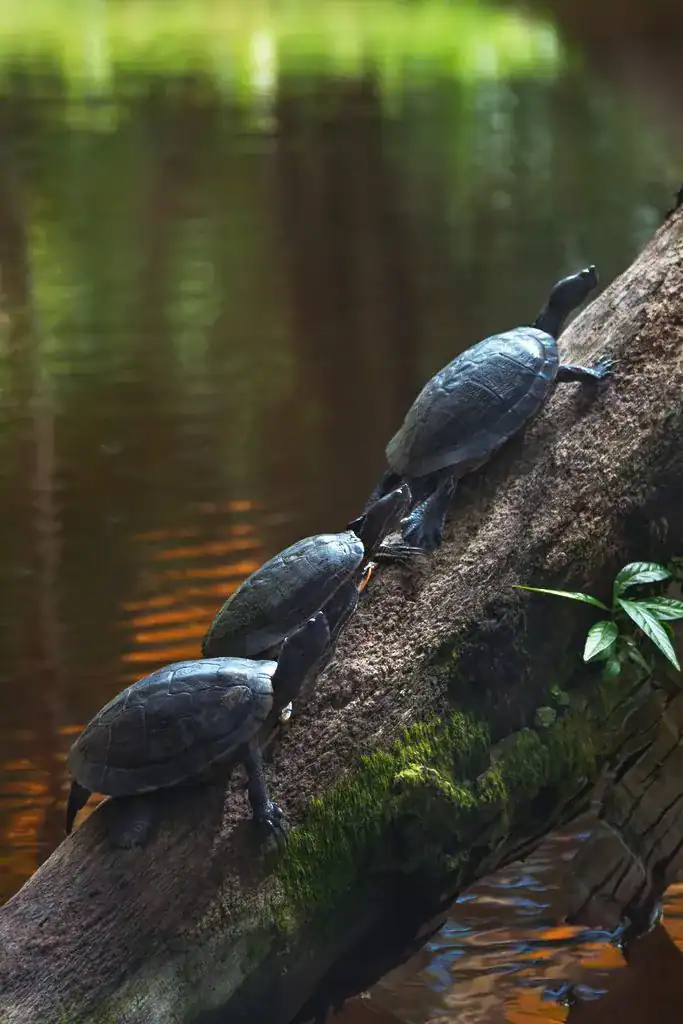
Climbing fallen trees logs and shoreline debris
Fallen trees are not true climbing.
- Logs act as elevated ground
- Turtles use them for basking
- Movement resembles walking, not climbing.
Why is vertical bark climbing extremely rare
Vertical climbing fails due to physics.
- Insufficient claw penetration
- Shell weight pulls backward
- No limb articulation for vertical grip
Claims of vertical tree climbing usually involve misinterpretation or staged angles.
Which turtle species are better climbers
Freshwater turtles with higher clinging ability
Some freshwater turtles show better traction and balance.
- Painted turtle
- Eastern musk turtle
- Northern map turtle
These species often inhabit rocky shorelines and debris-filled waterways.
Species commonly observed on angled surfaces
Turtles seen climbing usually share traits.
- Smaller body size
- Flatter shells
- Strong claws relative to body mass
Why most tortoises are poor climbers
Tortoises evolved for land travel.
- Heavier bodies
- Higher domed shells
- Reduced grip on bark and roots
Tree-climbing tortoise photos almost always show leaning trunks or human assisted placement.
What scientific research shows about climbing ability
Clinging and climbing on rough versus smooth surfaces
Research on turtle movement shows surface texture matters more than height.
- Rough surfaces increase grip dramatically
- Smooth concrete and metal reduce success
- Wet surfaces reduce grip further
Slope angle limits and real world meaning
Experimental studies show clear thresholds.
- Success drops sharply beyond moderate slopes
- Rough textures allow higher angles than smooth ones
- Vertical surfaces exceed natural limits
How research on ramps and shorelines applies to trees
Tree trunks function like natural ramps.
- Angle determines difficulty
- Bark texture affects grip
- Moisture changes success rates
This explains why turtles appear in trees near water but not in forests.
Environmental reasons turtles attempt to climb
Basking and thermoregulation
Elevation provides heat.
- Sun exposure improves digestion
- Logs and roots heat faster than water
- Trees near water act as basking platforms
Foraging access and food sources
Some food sources sit above ground.
- Insects on bark
- Fallen fruit near roots
- Aquatic prey near debris
Predator avoidance and habitat disturbance
Climbing can be a stress response.
- Flooding displaces turtles
- Shoreline development alters access points
- Noise and human activity push turtles upward
Wildlife sightings versus verified evidence.

How to evaluate photos and viral claims
Many viral images mislead.
- Camera angle exaggerates height
- Leaning trees appear vertical
- Human placement is rarely disclosed
Difference between observation and proof
Evidence falls into tiers.
- Peer-reviewed research
- Field observations with context
- Anecdotes without verification
Only the first two should guide conclusions.
Common misconceptions spread online
Common myths include.
- Turtles regularly climb trees
- Tortoises are natural climbers
- Climbing indicates aggression or escape behavior
None of these claims hold up under evidence.
Turtle versus tortoise climbing comparison
Habitat differences and evolutionary traits
Freshwater turtles evolved around uneven shorelines.
Tortoises evolved for dry land travel.
Weight shell height and fall risk
Fall risk rises with.
- Increased shell height
- Increased body mass
- Reduced surface friction
Why tortoises are often mistaken for climbers
Photos usually show.
- Sloped trunks
- Human handling
- Captive environments
These do not represent natural behavior.
What to do if you see a turtle climbing a tree
When to leave it alone
Leave the turtle alone if.
- It is stable
- It is near water
- It is not injured
Interference often causes harm.
When human intervention is appropriate
Intervene only if.
- The turtle is stuck
- The turtle is injured
- The turtle is in immediate danger
Contact wildlife professionals when possible.
Risks of improper handling
Improper handling can cause.
- Falls
- Shell fractures
- Internal injuries
- Stress related illness
Implications for pet owners and enclosure design
How turtles escape outdoor and pond enclosures
Turtles exploit small design flaws.
- Sloped walls
- Textured surfaces
- Objects near barriers
Designing ramps barriers and basking areas safely
Good design prevents escapes.
- Use smooth vertical barriers
- Keep climbable objects away from edges
- Provide safe basking ramps
Surface texture slope and height considerations
Key design rules.
- Gentle ramp angles
- Rough surfaces for basking only
- No vertical textured walls
What turtles can realistically do
Turtles can climb angled, rough, low surfaces near water.
What is rare but possible
Some species climb roots and lean on trunks briefly.
What is unsafe or unlikely
Vertical tree climbing is unsafe and extremely unlikely.
How this knowledge helps conservation and welfare
Reducing injury from falls and barriers
Understanding limits prevents injuries.
- Fewer falls
- Better enclosure design
- Safer shoreline structures
Improving habitat design near water bodies
Design informed by movement science helps turtles survive.
- Safer access points
- Reduced human impact
- Better basking areas
Supporting evidence based wildlife decisions
Accurate information protects animals.
It prevents panic, misinformation, and harmful intervention.
BASIC AND DEFINITION FAQs
Q. Can turtles climb trees
A. Most turtles cannot climb trees vertically. Some turtle species can climb angled tree trunks, exposed roots, and fallen trees for short distances.
Q. Do turtles ever climb trees in the wild
A. Yes, but only in specific situations. This usually involves leaning trees, roots near water, or fallen logs rather than upright trunks.
Q. Are turtles natural climbers
A. No. Turtles evolved for swimming, walking, and digging. Climbing is not a primary or efficient behavior for them.
Q. Can tortoises climb trees
A. Tortoises are even less capable than turtles. Their heavier bodies and domed shells make climbing unsafe and uncommon.
Q. Is a turtle in a tree normal behavior
A. It can be normal if the tree is angled or near water. It is not normal on vertical trunks or high branches.
Q. Why do people think turtles climb trees
A. Photos and videos often show turtles on leaning trunks or fallen trees, which can look like true climbing from certain angles.
Q. How do turtles climb angled trees or roots
A. They use their claws for traction and rely on rough surfaces, shallow angles, and short distances to maintain balance.
Q. How high can a turtle climb
A. Usually only a few feet at most. Height depends on surface texture, slope angle, and the turtle’s size and strength.
Q. How can you tell if a turtle is actually climbing or just resting
A. If the surface is angled and near water, the turtle is likely basking or moving slowly. Vertical positioning usually indicates staging or misinterpretation.
Q. How do turtles get into trees near water
A. Flooding, shoreline debris, fallen branches, and leaning trunks provide natural access routes.
Q. How do turtles climb compared to other reptiles
A. Turtles are much weaker climbers than lizards and snakes due to their shell weight and limited limb flexibility.
Q. Why would a turtle try to climb a tree
A. Common reasons include basking in sunlight, escaping predators, accessing food, or reacting to habitat disturbance.
Q. Is climbing dangerous for turtles
A. Yes. Falls can cause shell fractures, internal injuries, and death, especially from vertical surfaces.
Q. Can turtles fall from trees
A. Yes. Loss of grip on bark or wet surfaces can cause sudden falls.
Q. Does climbing indicate stress or danger
A. Sometimes. Habitat loss, flooding, or human activity can push turtles into risky behaviors.
Q. Are turtles often injured from climbing
A. Injuries are uncommon in natural angled environments but increase significantly around artificial or vertical structures.
Q. Does enclosure design affect turtle climbing behavior
A. Yes. Poor enclosure design increases escape attempts and climbing risks.
Q. Can improper enclosures lead to costly veterinary care
A. Yes. Falls and injuries from climbing often require expensive treatment or surgery.
Q. Is it cheaper to redesign a turtle enclosure than treat injuries
A. In most cases, yes. Preventive design reduces long-term costs and improves animal welfare.
Q. Do wildlife rescues spend resources on climbing-related injuries
A. Yes. Many rescues treat turtles injured from falls caused by human-made barriers and structures.
Q. Can turtles climb better than tortoises
A. Yes. Freshwater turtles generally have better grip and balance than tortoises.
Q. Can turtles climb walls or fences
A. Some turtles can climb textured or sloped walls, but smooth vertical barriers prevent climbing.
Q. Can turtles climb rocks better than trees
A. Often yes. Rocks usually provide better grip and stable angles than bark.
Q. Are logs safer than trees for turtles
A. Yes. Fallen logs act like elevated ground rather than vertical climbing surfaces.
Q. What physical traits limit turtle climbing ability
A. Short limbs, heavy shells, high center of mass, and limited joint flexibility.
Q. How does surface texture affect turtle climbing success
A. Rough surfaces improve traction. Smooth or wet surfaces sharply reduce grip.
Q. Does shell shape affect climbing ability
A. Yes. Flatter shells provide better balance than high-domed shells.
Q. How does moisture impact climbing
A. Moisture reduces friction and increases fall risk on bark and wood.
Q. Can turtles adapt to climb better over time
A. No. Climbing ability is constrained by anatomy rather than learned skill.
Q. Are sightings of turtles in trees becoming more common
A. Sightings appear more common due to social media, not because turtles are climbing more.
Q. How does habitat loss affect turtle climbing behavior
A. Habitat disruption forces turtles to use unsafe routes, including trees and barriers.
Q. Will AI image analysis reduce false turtle climbing claims
A. Yes. AI tools can better detect angles, staging, and environmental context.
Q. How can AI search improve wildlife education on turtle behavior
A. AI can surface evidence-based explanations and reduce misinformation spread.
Q. Why is accurate information about turtle climbing important
A. It prevents harmful human intervention and improves conservation and welfare outcomes.
Q. How does this topic impact future conservation planning
A. Understanding movement limits helps design safer shorelines, enclosures, and habitats.
Heya i am for the first time here. I found this board and I find It really useful & it helped me out a lot. I hope to give something back and aid others like you helped me.